
Carbendazim Mishozim 60% WP
Carbendazim
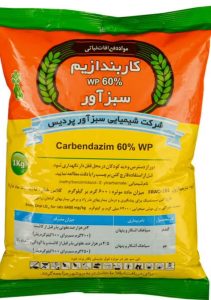
Mishozim 60% WP
C₉H₉N₃O₂
Carbendazim is a systematic benzimidazole fungicide of the carbamate class and a metabolite of the fungicide benomyl. It is used to seed disinfectant before planting.
And, control fungal diseases in cereals and fruits, including citrus, bananas, strawberries, nuts, pineapples, and apples. Also effective in controlling diseases such as Cercospora leaf spot in sugar beet, seedling death and root rot in ornamental plants, Fusarium and Septoria in cereals, and Rhizoctonia control in cotton.
When sprayed, it is absorbed and transported through the roots and green tissue. It is not compatible with alkaline compounds such as lime sulfur
Amount of consumption
2/1000 seed disinfection before planting, and 2.5 /1000 in broad areas for overt and covert black spot for wheat
Solubility in water : 8 mg/L Disintegration = 302 -305 degree
Temperature of disintegration = 1.5 – 2 hrs
Density: 1.45 g/cm3
CompTox Dashboard (EPA)DTXSID: 4024729
Carbendazim/Molar mass: 191.187 g/mol
Captan (Protective and Curative Fungicide)
Mishoside 50% WP
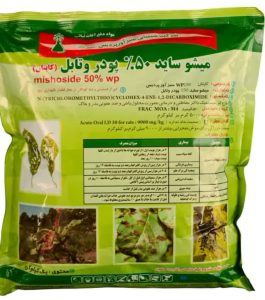
Chemical formula: (C9H8Cl3NO25)
Chemical name: 1,2,3,6-tetrahydro-N-(Trichloromethylthio) phthalimida
Captan is a general use pesticide that belongs to the phthalimide class of fungicides. It is a white solid, although commercial samples appear yellow or brownish. This fungicide is effective and curative in the form of foliar spray, seed and soil disinfection. Captan is compatible with most insecticides and fungicides, but since it is unstable at pHs above 7, It should not be mixed with alkaline solutions. It is also not compatible with oils and should not be used before or after the foliar application of oils, because it causes plant burn.
Captan has a favorable effect on the color and taste of fruits, and trees sprayed with Captan, have more colorful fruits. Also, this fungicide for mammals, with high safety and low toxicity
Amount of consumption
3/1000 to combat fungal diseases
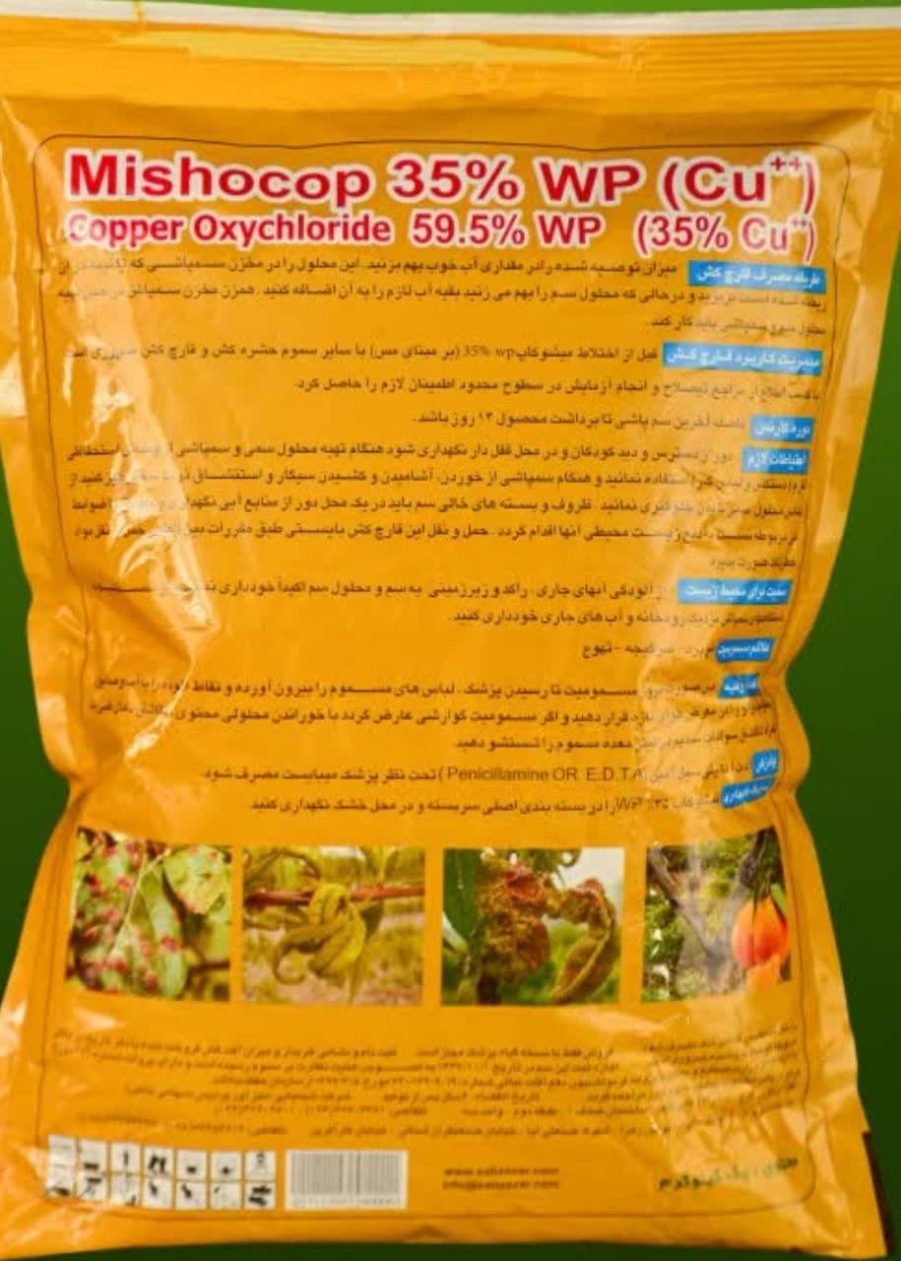
Copper Oxychloride
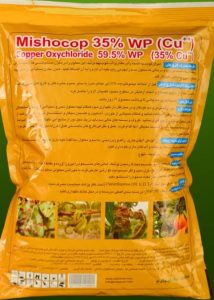
Mishocop 35% WP(Cu++)
Contact Fungicide & Bactericide With Protective Action
Copper oxychloride is a group of copper compounds. This toxin has fungicidal and bactericidal properties
To control fire blight on fruit trees, foliar spraying is carried out at a ratio of 2:1000 in 4 stages. The first stage is at the bud swelling stage, the second stage is when 5% of the blossoms open, the third stage is when 50% of the blossoms open, and the fourth stage is when the blossoms are fully open.
Mummy disease of cold-hardy fruit trees, leaf curl of peaches, gummosis in citrus, inflorescence rot in palms, and internal powdery mildew in vegetables and greens are controlled by using 1 to 3 in 1000 of this fungicide
Technical specifications
|
STATUS: |
ISO 765 (published) |
| IUPAC NAME: |
Dicopper(II) chloride Trihydroxide |
| CAS NAME: |
copper chloride oxide hydrate |
| CAS REG. NO.: |
1332-40-7 |
| FORMULA: |
ClCu2H3O3 |
| MECHANISM OF ACTION
|
After spraying, it slowly releases copper ions (Cu++). This copper ion is toxic to fungi and bacteria and causes denaturation of their enzymatic proteins
|
| ACTIVITY: |
bactericides |
| NOTES: |
This substance is considered by the International Organization for Standardization not to require a common name |
Bordeaux mixture 18%
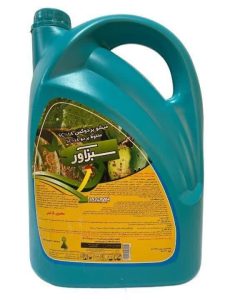
MishoBordoux
Bordeaux mixture with the trade name Misho Bordeaux is form of 18% SC with protective properties. The copper ions are contained in this fungicide, after being absorbed into the cell wall of bacteria or fungi, will have a simultaneous inhibitory effect on several physiological processes
Bordeaux is a contact fungicide and protective bactericide While is recommended for the prevention and treatment of various diseases of pome, stone, semi-tropical, deciduous, dry, evergreen, small-seeded, vegetable, greens, ornamental and non-fruit trees. Bordeaux mixture is the best copper fungicide and bactericide. That is a protective effect, with LD50>4000 mg/kg and it is among the healthiest mineral poisons.
:Physical and chemical properties
After Bordeaux is spraying on the plant, gradually. It’s turns into complex compounds due to moisture and carbon dioxide and releases copper ions. Bordeaux mixture is without crystalline texture and it is stuck together in a lump and it sits uniform on the plant, perfectly
Applications of Bordeaux mixture
Vineyards (grapes)
Bordeaux mixture is used in vineyards to control numerous fungal diseases. The most important of these diseases are: Downy Mildew: This disease, caused by the fungus Plasm Opara Viti cola, Powdery Mildew: This disease is also caused by fungi of the order Erysiphales
Bordeaux mixture protects against fungus by creating a protective layer on the leaves and clusters of grapes
Orchards
Apples and pears: Control diseases such as Apple Scab and Fire Blight; Peaches and nectarines: Combat diseases such as Peach Leaf Curl; Cherries and sour cherries: Prevent diseases such as Leaf Spot
Vegetables and greens
Tomatoes: Control diseases such as Late Blight and Powdery Mildew
Potatoes: Combat Late Blight and other fungal diseases
Carrots and Celery: Prevent leaf spot and fungal rot
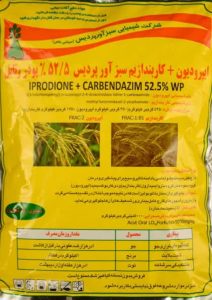
IPRODIONE + CARBENDAZIM 52.5% WP
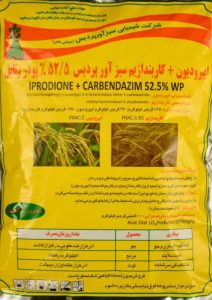
Mishovoral
The fungicide iprodione carbendazim is one of the toxins that is effective against many pathogens or dangerous disease-causing agents. This toxin is composed of iprodione (35%) and carbendazim (17.5%). Iprodione + Carbendazim fungicide contains 175 grams of iprodione and 85 grams of carbendazim per liter
Iprodione is a hydantoin fungicide, it is used in crops affected by botrytis, brown rot, sclerotinia, and other fungal diseases in plants
Carbendazim is a systemic fungicide. The benzimidazole is used frequently to control plant diseases, including soil-borne diseases, throughout a growing season
Application of IPRODIONE + CARBENDAZIM 52.5% WP
The main use of the fungicide Iprodione Carbendazim is on fungi such as Alternaria, Botrytis, and Fusarium, which can be very effective
:Introduction and features
Systemic and contact fungicide-
With protective and curative effect-
Has two different modes of action with synergistic properties-
Reduces the risk of resistance-
Has a maintenance effect on the plant-
Moves in the plant acropetally-
Disinfects seeds and increases growth and yield-
Effective on ascomycetes and basidiomycetes-
Controls a wide range of fungal diseases–
Uses of Mishovoral fungicide
- Rice: Sheet blight_ 1 kg/ha-
- Berry: Branch tip wilt_ 1 in 1000-
- Barley: Brown spot_ 1 in 1000–
Insecticide
Deltamethrin
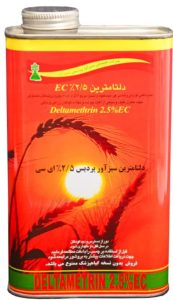
DESSIS(C22H19Br2NO3)
Deltamethrin is a pyrethroid (type 2) ester insecticide, It hat acts by contact and ingestion on sucking and chewing insects. Deltamethrin plays a key role in controlling malaria vectors, and is used in the manufacture of long-lasting insecticidal mosquito nets; however, resistance of mosquitos and bed bugs to deltamethrin has seen a widespread increase. It is a non-systemic insecticide and contact with ingestion mode of action. It belongs to the pyrethroids, which disrupt sodium channels in the axon membrane and has a knock-down property that causes the insect to become paralyzed and fall quickly. Deltamethrin is used to control a wide range of pests.
Additional information
Pesticide class Insecticides
Active ingredient Deltamethrin
Formulation 2.5% EC
Resistance group IRAC:3A
PHI Sugar beet and Wheat: 30day, Fruit Trees: 7day
Acute Oral LD 50 for Rats 87<mg/kg
CYPERMETRIN 40% Ec
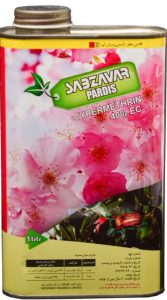
Formulation: EC 40 %
Resistance group IRAC:3A
It is a non-systemic insecticide and contact & Stomach Action with ingestion mode of action. It belongs to synthetic pyrethroid which disrupt sodium channels in the axon membrane and has a knock-down property that causes the insect to become paralyzed and fall quickly
Cypermethrin has a quickly act on the larval and adult stages of moths. It is easily degraded on soil and plants but can be effective for weeks when applied to indoor inert surfaces. It has wide used in cotton, cereals, vegetables and fruits for food storage, in public health and animal husbandry
Additional Information
Agricultural Cypermethrin 40% EC is a pyrethroid insecticide which is used against apple and cotton leaf worm
:Key features
- Non systemic, contact and digestive with residual effect-
- Active ingredient: 400 gr/kg-
- Preharvest interval: 21 days-
- Active ingredient toxicity: 250-4150–
:Precautions
- Prevent grazing animals from pesticide treated areas at least for 21 days
- .Dangerous for honey bee and birds
Crop |
Pest |
Rate of Use |
Apple |
Leafworms |
75ml per thousand |
Cotton |
Leafworms |
175ml per hector |
Imidacloprid
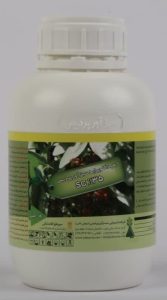
Mishopride 35%
Imidacloprid is widely used for pest control in agriculture. Other uses include application to foundations to prevent termite damage, pest control for gardens and turf, treatment of domestic pets to control fleas, protection of trees from boring insects, and in preservative treatment of some types of lumber products
Imidacloprid is a systemic insecticide belonging to a class of chemicals called the neonicotinoids which act on the central nervous system of insects. The chemical works by interfering with the transmission of stimuli in the insect nervous system. Nicotine is naturally found in many plants, including tobacco, and is toxic to insects. Imidacloprid is used to control sucking insects, termites, some soil insects, and fleas on pets. It has been used in products sold in the United States since 1994. Imidacloprid is used to control sucking insects, some chewing insects including termites, soil insects, and fleas on pets. In addition to its topical use on pets, imidacloprid may be applied to structures, crops, soil, and as a seed treatment. midacloprid 35% SC Dosage per Litre and Application Method: For Foliar Spray Application: Use 50 to 75 ml per litre of water. Mix 0.5 ml per litre of water.
- 1
- 2